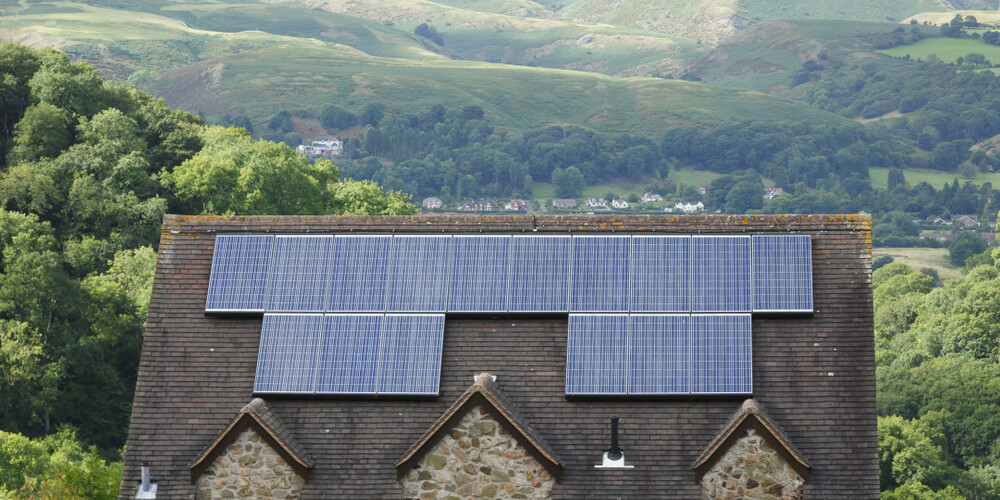
The Smart Export Guarantee (SEG) is a UK Government-backed scheme that allows households, businesses, farms and community projects to receive payments for surplus renewable electricity exported back into the electricity network.
The scheme replaced the old Feed-in Tariff (FiT) and requires larger electricity suppliers to offer export tariffs for eligible renewable generators.
Rather than paying for installing equipment, SEG pays you for electricity you do not use and send back into the grid.
This means if your solar panels, wind turbine or renewable system produces more electricity than your property needs, you may receive payments for the exported energy.
What Technologies Can Qualify?
Eligible renewable technologies can include:
- Solar photovoltaic (PV) systems
- Wind turbines
- Hydropower systems
- Anaerobic digestion systems
- Micro combined heat and power (CHP) systems
Systems generally must be below maximum scheme size limits.
How Do Payments Work?
Payments are based on:
- The amount of electricity exported
- Your chosen supplier tariff
- Meter readings from your export meter or smart meter
Payment rates vary by supplier.
Some suppliers pay only a few pence per kWh while others may offer significantly higher rates.
Payments are commonly:
- Monthly
- Quarterly
depending on supplier arrangements.
Who May Qualify?
You may qualify if:
- You have an eligible renewable system installed
- The installation was completed by an MCS-certified installer (or equivalent qualifying route)
- You have a smart meter or export meter capable of recording exported electricity
- You are a homeowner, landlord, business, farm or community organisation
Step By Step – How To Apply
Step 1 – Install Your Renewable System
Systems should normally be installed through an accredited installer.
Keep copies of:
- Installation certificates
- MCS documentation
- Commissioning paperwork
- Electrical certificates
Step 2 – Confirm Grid Connection Approval
Your installer usually contacts the local electricity network company.
The local Distribution Network Operator (DNO) may issue:
- G98 approval
- G99 approval
These confirm the system can connect and export electricity.
Many installers arrange this process.
Step 3 – Ensure You Have A Smart Or Export Meter
You will usually need:
- Smart meter
or
- Approved export meter
This records electricity being sent back into the network.
Without export readings, payments usually cannot be calculated.
Step 4 – Choose A SEG Supplier
Large energy suppliers must provide export tariffs.
When comparing suppliers check:
- Export payment rates
- Fixed or flexible tariffs
- Payment frequency
- Contract terms
- Smart tariff options
Step 5 – Submit Your Application
Suppliers commonly request:
- MCS certificate
- DNO approval letter
- Smart meter details
- System commissioning information
- Ownership or tenancy details
- Bank details
Some suppliers may request photographs of:
- The installation
- Meter readings
- Equipment serial numbers
Step 6 – Payments Begin
Once approved:
- Export electricity is recorded
- Payments begin
- Meter readings are submitted automatically or manually
Payments generally start from supplier approval rather than installation date.
Typical Suppliers Offering SEG
Examples can include:
- British Gas
- EDF
- E.ON Next
- Octopus Energy
- OVO
- Scottish Power
- Utility Warehouse
Other suppliers may also offer voluntary tariffs.
Payment rates can vary significantly between providers.
Additional Information
- SEG replaced the Feed-in Tariff scheme
- You are paid only for exported electricity
- Using electricity in your property first usually creates greater savings
- Battery storage can help maximise value
- Payment rates vary considerably between suppliers
Need Information On Current Grants & Support?
Funding arrangements and eligibility requirements can change over time.
Contact Grants Gateway to discuss renewable energy support routes, export payments and funding options that may apply to your property, business or project circumstances.
Available support and eligibility requirements can vary depending on location and individual circumstances.
EPC Rules for Landlords – UK
Energy Performance Certificates (EPCs) are a legal requirement for rental properties across the UK and measure how energy-efficient a property is. Properties receive a rating from A (most efficient) through to G (least efficient).
Landlords must ensure rental properties meet minimum energy efficiency requirements before tenants move into the property.
These rules are becoming increasingly important as the Government continues to focus on reducing carbon emissions and improving housing standards.
Current EPC Rules
Current legislation generally requires:
- Rental properties to hold a valid EPC
- Minimum EPC rating of E before a property can be legally let
- Properties rated F or G usually require improvements before being rented
Some exemptions can apply where improvements are not possible or where costs exceed permitted limits.
Future Changes
The Government has previously proposed increasing minimum standards towards:
- EPC C by 2030
Although future deadlines are still being developed, many landlords are already preparing early to avoid larger upgrade costs later.
Improving a property now may help avoid future compliance issues and improve long-term property value.
Why EPC Rules Matter
Meeting EPC requirements may help:
- Reduce tenant energy bills
- Improve property desirability
- Reduce void periods
- Improve energy performance
- Increase long-term property value
Failure to comply can potentially lead to:
- Financial penalties
- Restrictions on renting property
- Enforcement action by local authorities
What Improvements Can Help?
Energy efficiency improvements commonly include:
Heating Improvements
- Boiler upgrades
- Heat pumps
- First-time central heating systems
- Smart heating controls
Insulation Measures
- Loft insulation
- Cavity wall insulation
- Solid wall insulation
- Floor insulation
- Draught-proofing
Renewable Measures
- Solar PV systems
- Renewable heating systems
- Energy efficiency upgrades
Grants & Support Available For Landlords
Support schemes may include:
- ECO4 – Heating, insulation and renewable measures for qualifying tenant households
- Great British Insulation Scheme (GBIS) – Insulation improvements
- Home Energy Scotland – Interest-free loans and support routes in Scotland
- Boiler Upgrade Scheme (BUS) – Heat pump grants of up to £7,500
- Northern Ireland Affordable Warmth – Support towards heating and insulation measures
Eligibility depends on property location, EPC rating and tenant circumstances.
Step By Step – How To Prepare
Step 1 – Check Your EPC
Review:
- Current EPC rating
- Expiry date
- Recommended improvements
Step 2 – Review Recommendations
EPC reports often identify:
- Heating improvements
- Insulation opportunities
- Renewable options
- Potential cost savings
Step 3 – Explore Funding Support
Check whether grant or loan support may reduce upgrade costs.
Step 4 – Arrange Works
Use approved installers where required.
Need Information On Current Grants & Support?
Funding arrangements and eligibility requirements can change over time.
Contact Grants Gateway to discuss current landlord grants, funding routes and support options that may apply to your property portfolio or circumstances.
Available support and eligibility requirements can vary depending on location and individual circumstances.
Feed-in Tariffs (FiTs) – Legacy Scheme
The Feed-in Tariffs (FiTs) scheme was a UK Government programme that paid households, businesses, and community projects for generating and exporting renewable electricity. It ran from 2010 until 2019, when it was closed to new applicants and replaced by the Smart Export Guarantee (SEG).
Although closed, many households and organisations still receive legacy payments if they joined before the scheme ended. Payments continue for up to 20 years (25 years for some early solar PV systems).
What the funding covered
FiTs provided two types of payments:
1. Generation Tariff
- Paid a set rate for every kWh of renewable electricity generated, even if it was used in the home.
- Rate was guaranteed for the length of the scheme (index-linked).
2. Export Tariff
- Paid for electricity exported back to the grid.
- Usually based on a fixed rate (initially “deemed export” at 50% of generation for most homes).
Eligible technologies (≤ 5 MW):
- Solar PV panels
- Wind turbines
- Hydropower systems
- Anaerobic digestion (AD) plants
- Micro-CHP systems
Who qualified (before closure)?
- Households, landlords, businesses, farms, and community groups that installed MCS-certified renewable systems before 31 March 2019.
- Systems had to be registered with a licensed supplier to receive payments.
How it works today
- Closed to new applicants since March 2019.
- Existing participants continue to receive payments for the remainder of their contract term (usually 20 years, sometimes 25).
- Payments are made quarterly, based on meter readings or deemed export rules.
- The scheme has been replaced for new generators by the Smart Export Guarantee (SEG).
✅ Summary: Feed-in Tariffs (FiTs) paid households and businesses for generating renewable electricity between 2010 and 2019. While the scheme is closed, legacy participants still receive payments for up to 20–25 years. New applicants must now apply for the Smart Export Guarantee (SEG) instead.
Domestic Renewable Heat Incentive (Domestic RHI) – Legacy Scheme
The Domestic Renewable Heat Incentive (RHI) was a UK Government programme that encouraged households to switch from fossil fuel heating to renewable and low-carbon heating systems. It ran from 2014 until March 2022, when it was closed to new applicants.
Although the scheme has ended, households that joined before closure continue to receive quarterly payments for up to 7 years after accreditation. Payments are made by Ofgem based on the amount of renewable heat generated.
What the funding covered
The Domestic RHI supported a range of renewable heating technologies, including:
Eligible Technologies
- Air source heat pumps
- Ground source and water source heat pumps
- Biomass boilers and biomass pellet stoves with back boilers
- Solar thermal panels (for hot water only)
Payments
- Tariffs were set per kilowatt-hour (kWh) of renewable heat produced.
- Payments were made quarterly for 7 years.
- Amounts were based on:
- Metered heat output (for some systems); or
- Estimated heat demand from your property’s EPC (Energy Performance Certificate).
Who qualified (before closure)?
You could apply if you were a:
- Homeowner, private landlord, or self-builder with an eligible renewable heating system.
- Properties had to have a valid EPC.
- Systems had to be installed by an MCS-certified installer.
How it works today
- The scheme closed to new applications in March 2022.
- Households already accredited continue to receive payments until the end of their 7-year term.
- Payments are made quarterly by Ofgem, provided the household continues to meet reporting and maintenance requirements.
- The scheme has since been replaced by the Boiler Upgrade Scheme (BUS) in England and Wales, offering upfront grants instead of long-term payments.
Summary: The Domestic Renewable Heat Incentive (RHI) ran from 2014 to 2022, paying households for generating renewable heat with technologies like heat pumps, biomass boilers, and solar thermal. It is now closed, but legacy participants still receive quarterly payments for 7 years. New applicants should look to the Boiler Upgrade Scheme (BUS) for support.
Social Housing Decarbonisation Fund (SHDF) – England
The Social Housing Decarbonisation Fund (SHDF) is a UK Government-funded programme designed to improve the energy efficiency of social housing properties across England.
The programme helps councils, housing associations and registered social landlords upgrade homes with poor energy performance ratings, reduce carbon emissions and lower energy bills for tenants.
The aim is to improve properties currently rated EPC D–G, helping move homes towards EPC C and above through large-scale retrofit and energy improvement projects.
Unlike many household grants, tenants do not apply directly. Applications are made by housing providers and upgrades are delivered free to eligible tenants.
What Support Could Be Available?
The scheme follows a whole-house retrofit approach, meaning multiple improvements may be installed together.
Insulation Measures
Support may include:
- Loft insulation
- Roof insulation
- Cavity wall insulation
- External wall insulation
- Internal wall insulation
- Floor insulation
Heating Improvements
- Air source heat pumps
- Ground source heat pumps
- District and communal heating systems
- Smart heating controls
- Thermostats
- Heating upgrades
Renewable & Additional Measures
- Solar photovoltaic (PV) panels
- Solar thermal systems (some projects)
- Ventilation systems
- Damp and mould prevention measures
- Air quality improvements
Who Applies?
Applications are usually submitted by:
- Housing associations
- Local councils
- Registered social landlords
- Housing providers
Tenants do not submit applications directly.
Who Benefits?
Support is intended for:
- Social housing tenants
- EPC D–G properties
- Lower efficiency housing stock
Improvements are generally:
- Installed free of charge
- No repayment required
- No direct tenant application required
Benefits may include:
- Lower energy bills
- Warmer homes
- Reduced damp and condensation
- Improved comfort
- Better health outcomes
How The Process Works
Step 1 – Housing Providers Review Properties
Landlords identify:
- EPC D–G homes
- Older housing stock
- Properties requiring improvement
Step 2 – Retrofit Professionals Appointed
Landlords commonly appoint:
- Retrofit Assessors
- Retrofit Coordinators
- Retrofit Designers
These specialists assess homes and prepare upgrade plans.
Step 3 – Funding Applications Prepared
Housing providers develop:
- Whole-house retrofit plans
- Property data reviews
- Cost estimates
- Energy saving projections
Applications are then submitted during Government funding rounds.
Step 4 – Funding Assessment
Applications are assessed against:
- Energy savings
- Carbon reduction
- Project readiness
- Value for money
- Delivery plans
Step 5 – Tenant Contact & Installation
If funding is approved:
- Tenants are contacted
- Surveys arranged
- Installation schedules agreed
- Works completed by approved contractors
Housing providers also provide support explaining heating controls and new systems.
Important Information
- Tenants do not usually apply directly
- No repayment arrangements apply
- Works are delivered through housing providers
- Competitive funding rounds operate for landlords
- Retrofit works follow PAS 2035 standards
Need Information On Current Grants & Support?
Funding arrangements and eligibility requirements can change over time.
Contact Grants Gateway to discuss current social housing funding routes and support options that may apply to your property or housing circumstances.
Available support and eligibility requirements can vary depending on location and individual circumstances.
Related Posts